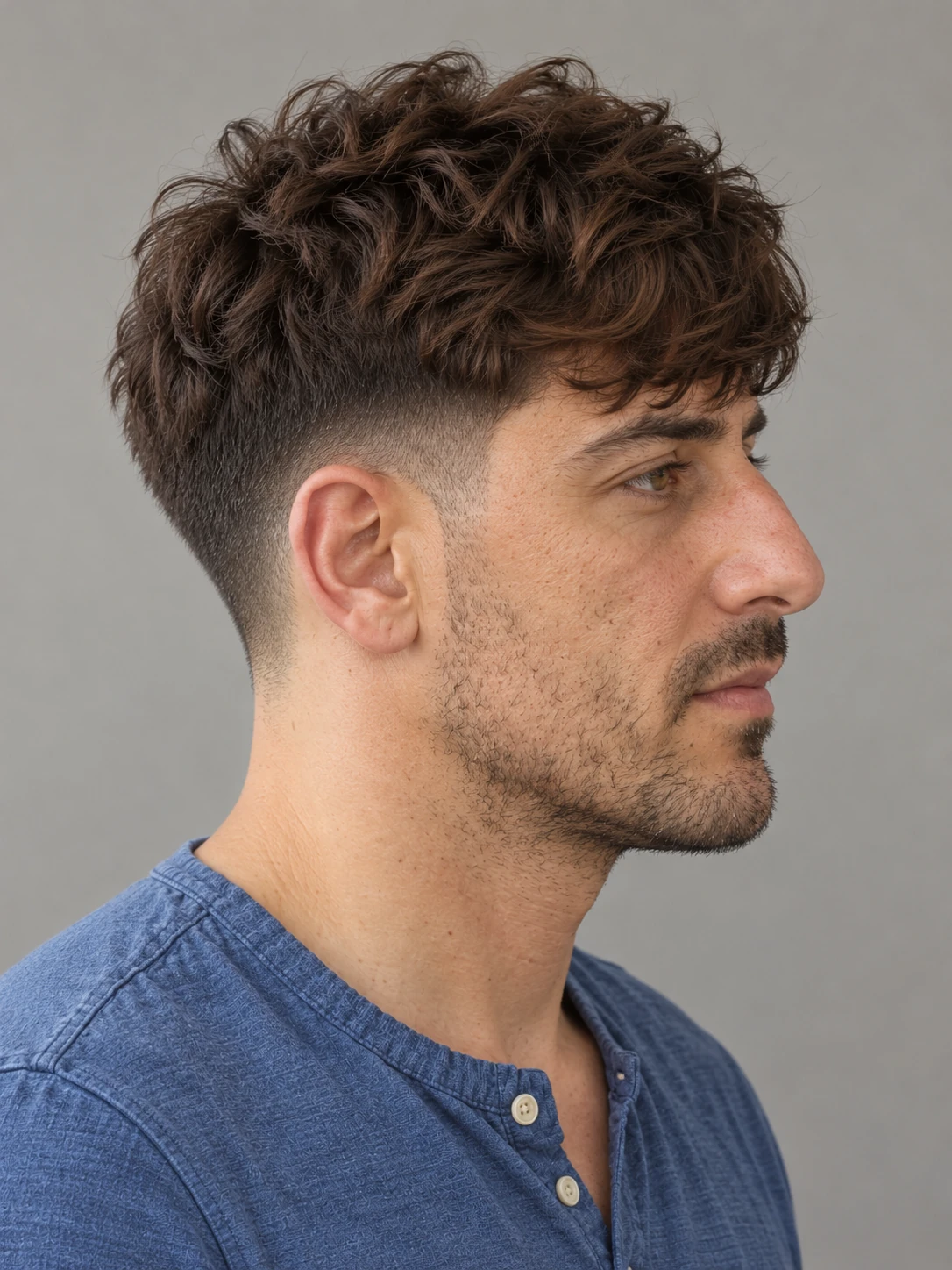
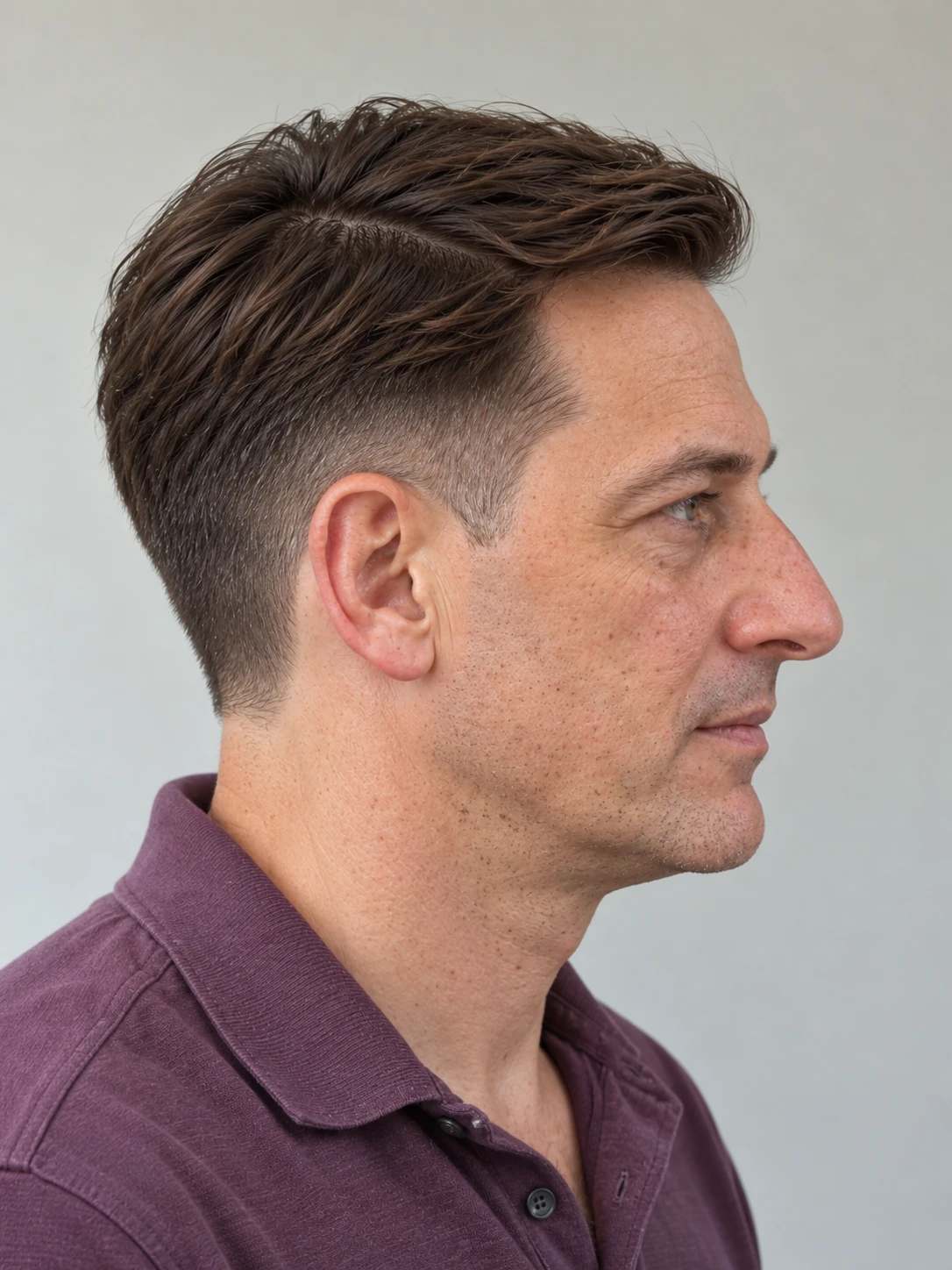
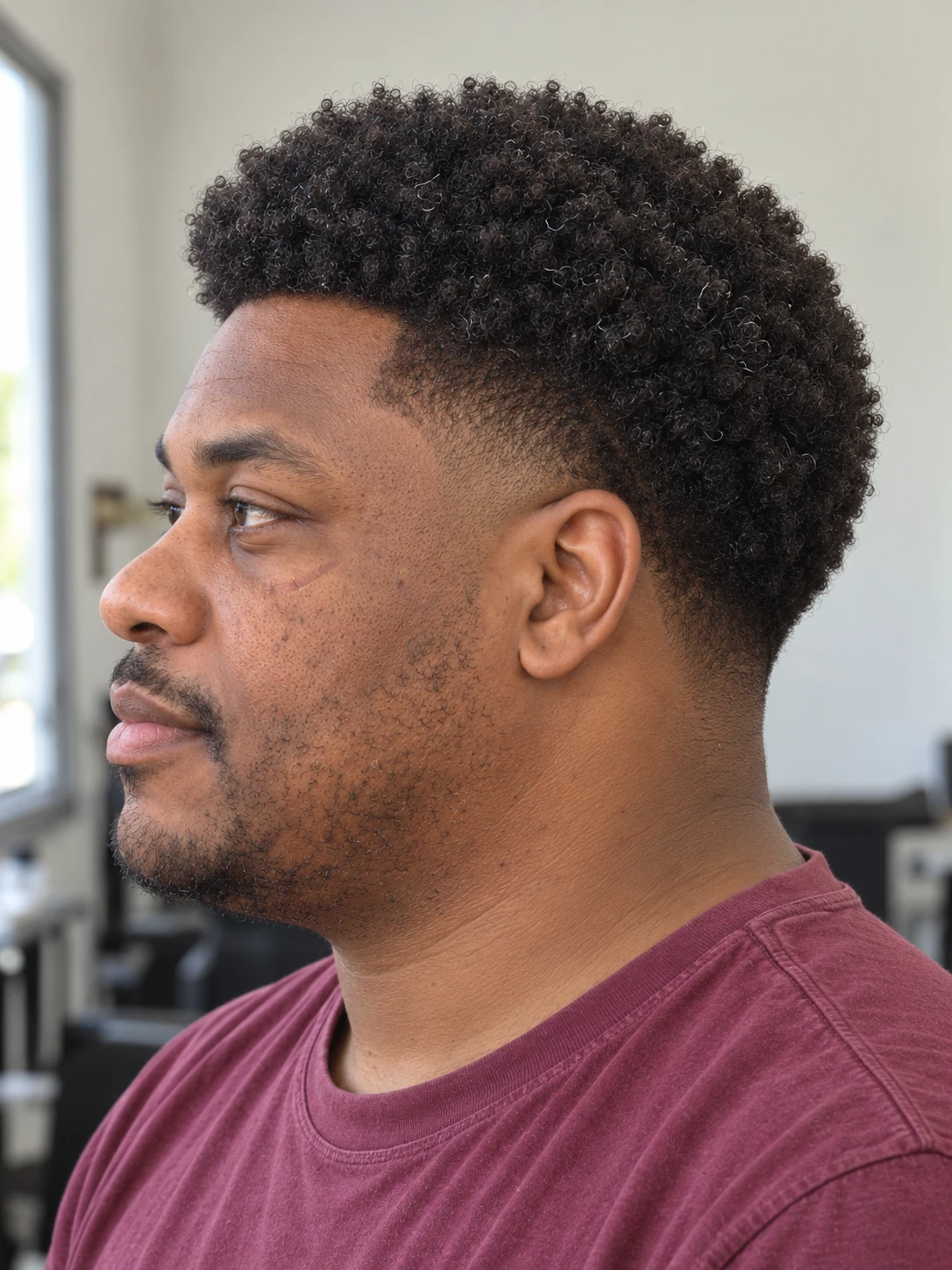
Mid taper is a useful search label, but it does not specify a fixed point on every head. Start by finding the particular transition you like and checking how much of the surrounding outline remains.
A good comparison keeps the top, viewing angle and finish in mind. Otherwise you may be reacting to a different fringe or brighter lighting rather than the placement itself.
01 / THE DETAIL
Find the upper edge of the short area
Compare where the temple transition reaches into the longer hair and how the nape is treated. The word mid suggests a position between lower and higher options, but the visible contour is more useful than a supposed universal midpoint.
Ask your barber to indicate that contour on your own head. Explain whether you are choosing the reference for its position or because its edges look particularly close. Those are separate decisions.
02 / THE DETAIL
A mid taper is not automatically a full mid fade
Some references use mid taper for a more localised temple and nape treatment; others show substantially shortened sides. Confirm the intended coverage rather than assuming that every photograph carrying the term represents the same shape.
Look behind the ear. If retaining hair there matters to you, include that in the brief. Conversely, if you want a more continuous faded area across the sides and back, explain that rather than expecting the taper label to communicate it.
03 / THE DETAIL
Decide how the sides support the top
A fuller area above the taper can create a different outline from a close connection to the top. Use a profile and front view to compare the width and the point where the silhouette changes.
Try a practical description: 'I like the transition here, but I want less width above it' or 'keep this side fullness under the curls'. That describes a preference without prescribing the barber's technique.
04 / THE DETAIL
Choose the top as its own part of the brief
Mid placement does not require one top style. A fringe worn forward, a side-directed top and a taller styled shape need different conversations about length and daily wear. Choose the direction you expect to use most often.
If your favourite example has much more length than you currently have, ask which part can be achieved now. An interim plan is clearer than expecting the side treatment to create missing top length.
05 / THE DETAIL
Make a fair low–mid–high comparison
Select examples with similar angles and identify the same features in each: temple contour, hair around the ear and nape transition. Note differences you cannot separate, such as unrelated top lengths or a photograph that hides the rear.
Bring the example that comes closest and name one adjustment. If you are unsure about moving higher, discuss a more conservative first step and review the result before requesting a larger change.
- Mark the placement you like.
- Specify the side weight you want retained.
- Discuss the shortest finish separately.
THE USEFUL DETAILS
Questions, answered
Is a mid taper the same as a mid fade?
Do not assume so. The labels can overlap, but a mid-taper reference may preserve more of the side outline than a fuller mid fade. Compare the area behind the ear, the nape and the upper boundary of the transition. Ask your barber to confirm the intended coverage.
View in the questions library ↗Can I discuss a mid taper while keeping a longer fringe?
Yes: treat the taper and fringe as separate parts of the brief. Show the front position you want to preserve and ask how the sides would connect to it. Your current length and growth direction need assessment; the placement label does not guarantee a particular top shape.
View in the questions library ↗Keep exploring
Find your next haircut ↗FURTHER READING
Sources and editorial notes
Published by Taper Fade. These barbering and manufacturer resources provide background reading; they have not reviewed or endorsed this page.