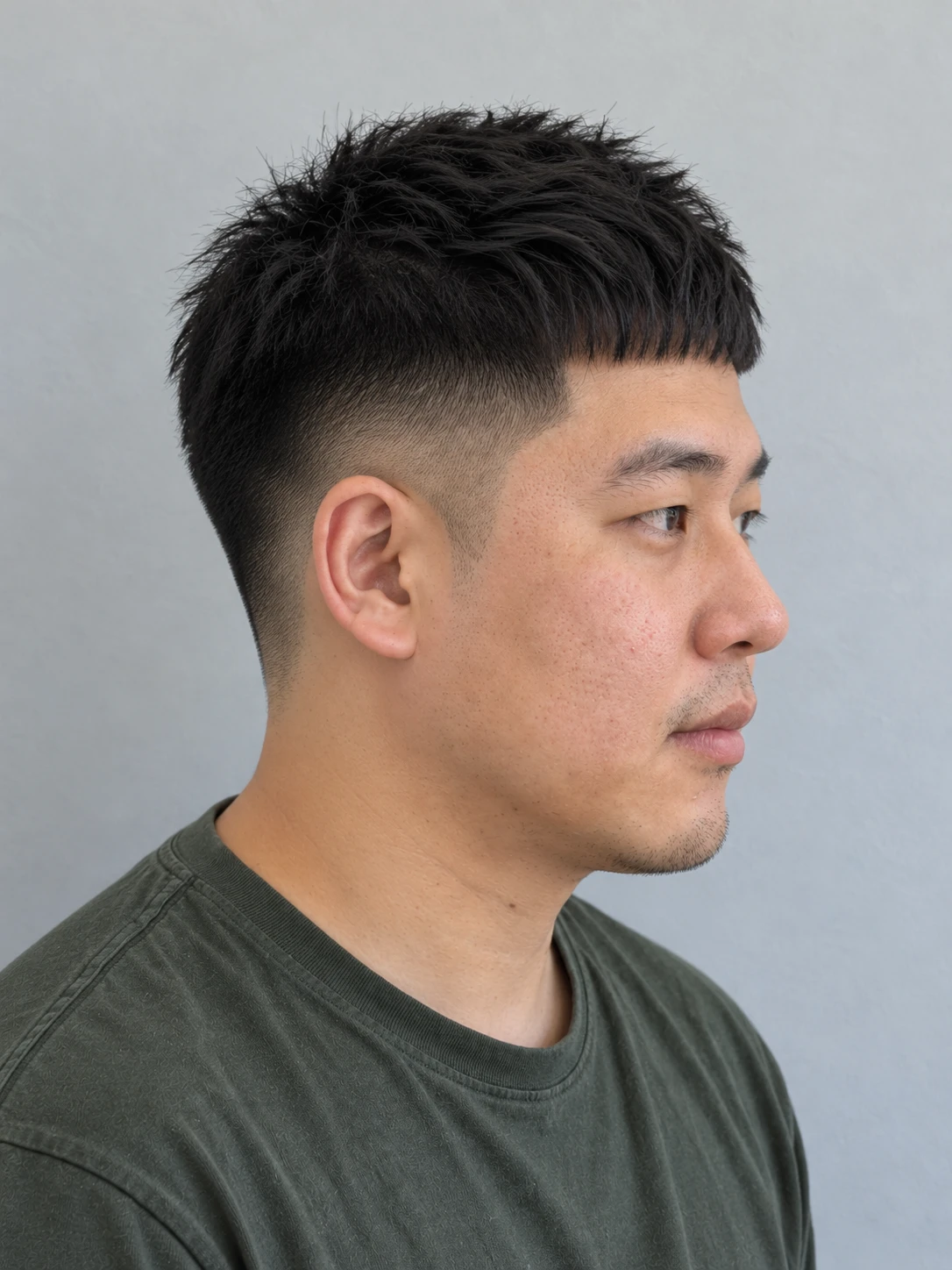
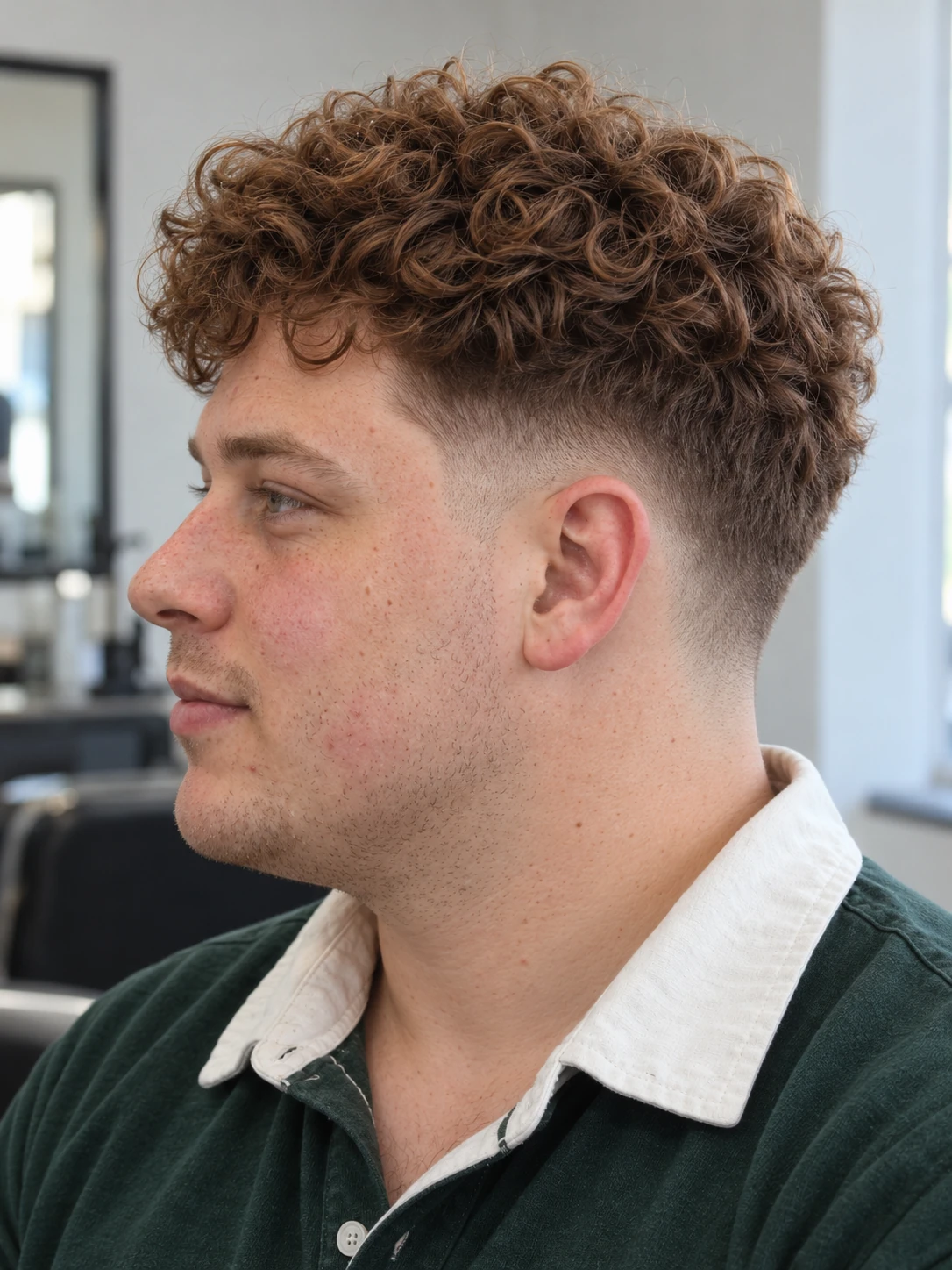
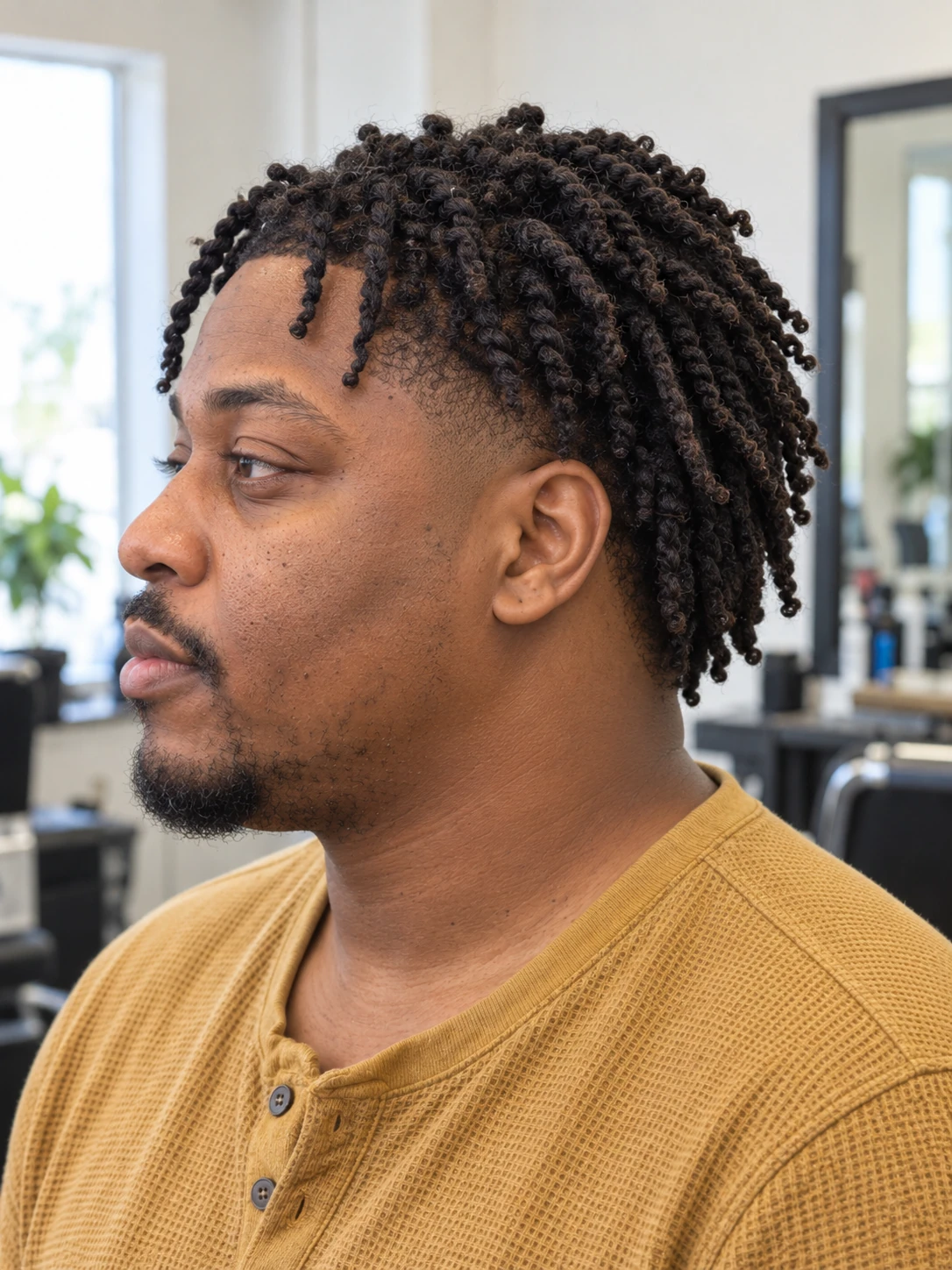
A high-taper reference can show a more pronounced transition near the temples, but the phrase is not a promise of one standard shape. Some images labelled high taper overlap with what another barber would call a high fade.
Choose the visible outline first. Then discuss how far the short area extends, what remains around the ear and how the longer top connects.
01 / THE DETAIL
Distinguish a higher taper from broader faded sides
Height and coverage are related decisions, not interchangeable ones. A higher local transition at the temple is different from shortening a large continuous area across the sides and rear. A front photograph may not reveal that difference.
Inspect a profile and rear view before choosing. Ask what would be removed behind the ear and below the crown. If the reference does not show those areas, treat them as questions rather than fill them in from assumption.
02 / THE DETAIL
Decide where the longer shape begins
Look at the meeting point between the short transition and the top. Do you want an obvious change in width, a closer connection or a fuller upper outline? Identify that feature with a profile image.
Keep the top request specific: retained fringe, curl shape, directional length or height. A higher taper will not automatically reproduce the volume or styling seen above it in a reference.
03 / THE DETAIL
Discuss how close the edges should be
Do not use high as shorthand for skin. Ask whether the shortest area should show skin or visible hair, and compare how much contrast you actually want. The finish should be agreed alongside the placement.
Mention any part of the perimeter you want left natural. A sharper front outline or a beard transition is an additional choice; it should not appear simply because the haircut has a higher taper.
04 / THE DETAIL
Check the haircut as a complete silhouette
Step back from temple close-ups and compare the whole head from front, side and rear. A close-up can explain blending while hiding the overall width, top length and nape contour that determine whether you like the finished shape.
If you wear glasses or usually move the front off your face, mention that during the consultation. Describe the version you will wear day to day, rather than selecting only the most dramatic photographed angle.
05 / THE DETAIL
Agree the size of the change
Moving higher may remove length that you currently use in the side shape. Ask the barber which areas would change and what a lower alternative would preserve. This lets you choose the amount of change with a clear picture of the result.
Before leaving, review the rear as well as the temples and note what you want repeated. Maintenance should follow your own preferred outline and observed regrowth, rather than a fixed schedule attached to the style name.
THE USEFUL DETAILS
Questions, answered
Should a high taper automatically include a beard blend?
No part of the beard request should be left implicit. Show whether you want a continuous connection, a more distinct separation or the beard left alone. Ask what would change at the sideburn and agree the beard outline separately from the taper placement and shortest finish.
View in the questions library ↗How should I compare a high taper with a high fade?
Look beyond the height at the temple. Check how far the short area extends around the ear and across the rear, then compare what remains beneath the top. A higher localised transition and broadly faded sides are different requests, even when reference captions use similar words.
View in the questions library ↗Keep exploring
Find your next haircut ↗FURTHER READING
Sources and editorial notes
Published by Taper Fade. These barbering and manufacturer resources provide background reading; they have not reviewed or endorsed this page.