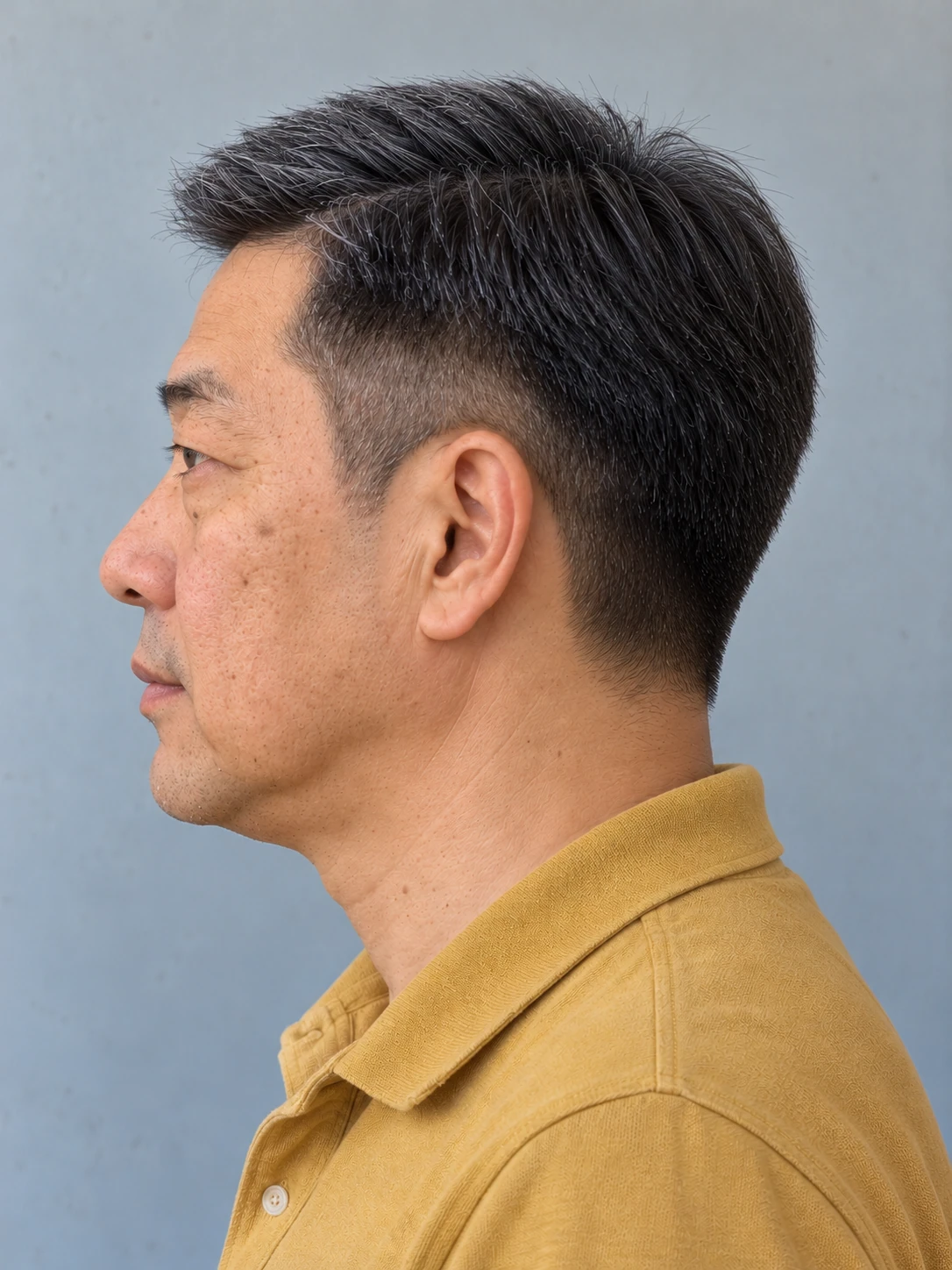
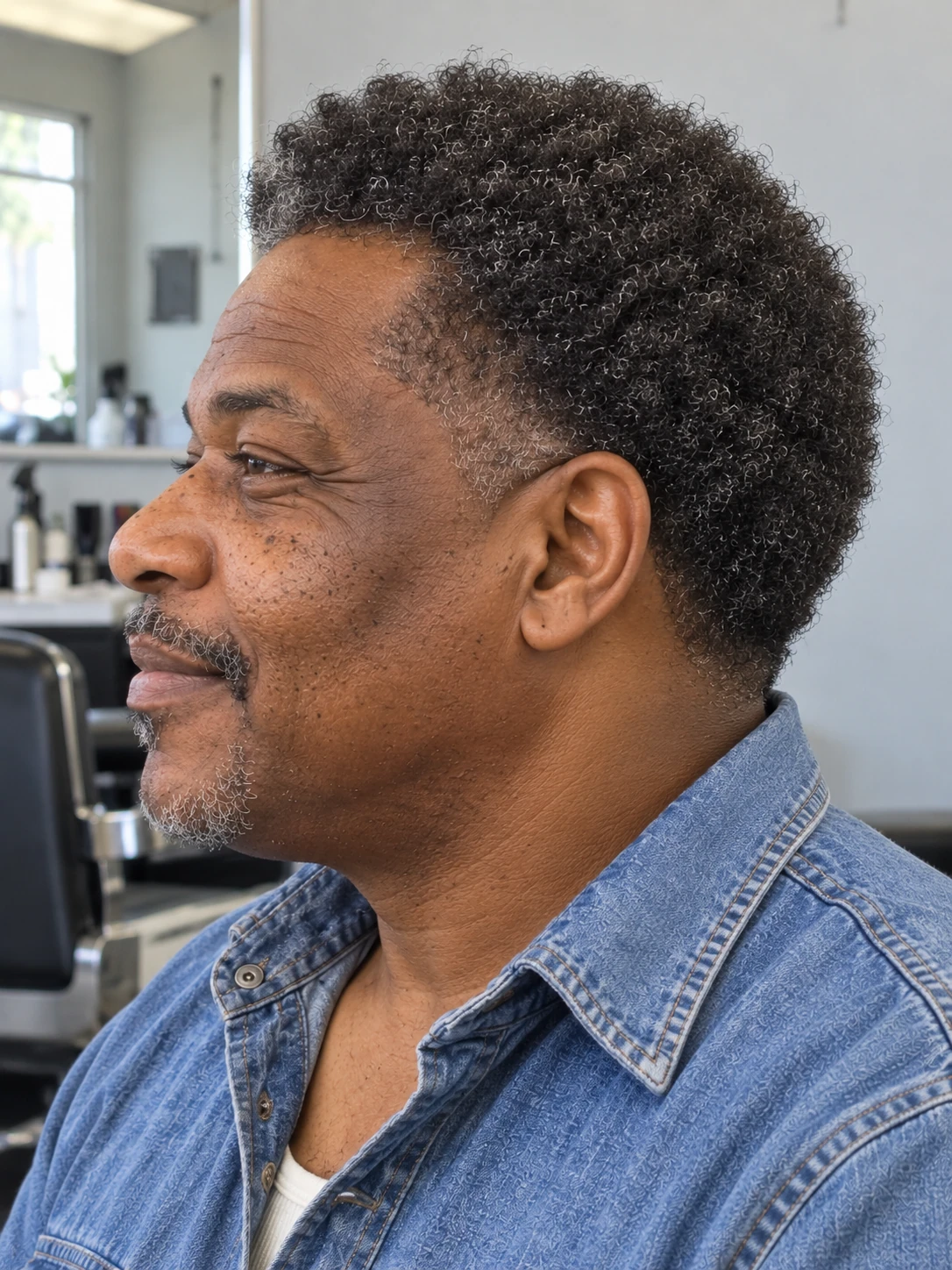
A low taper gives the lower edges a closer finish while keeping a fuller shape above the ears. It can sit beneath a crop, curtains, curls or an Afro: the taper describes the edges, not the entire haircut.
Choose the placement, shortest finish and top separately. A side image helps show the blend, while the back view shows the nape. Together they tell your barber more than the haircut name alone.
CHOOSE THE PLACEMENT
Low, mid or high taper?
A lower transition keeps the closest work near the perimeter. A higher one makes the contrast more noticeable. Compare how much side weight you want to keep as well as the height.
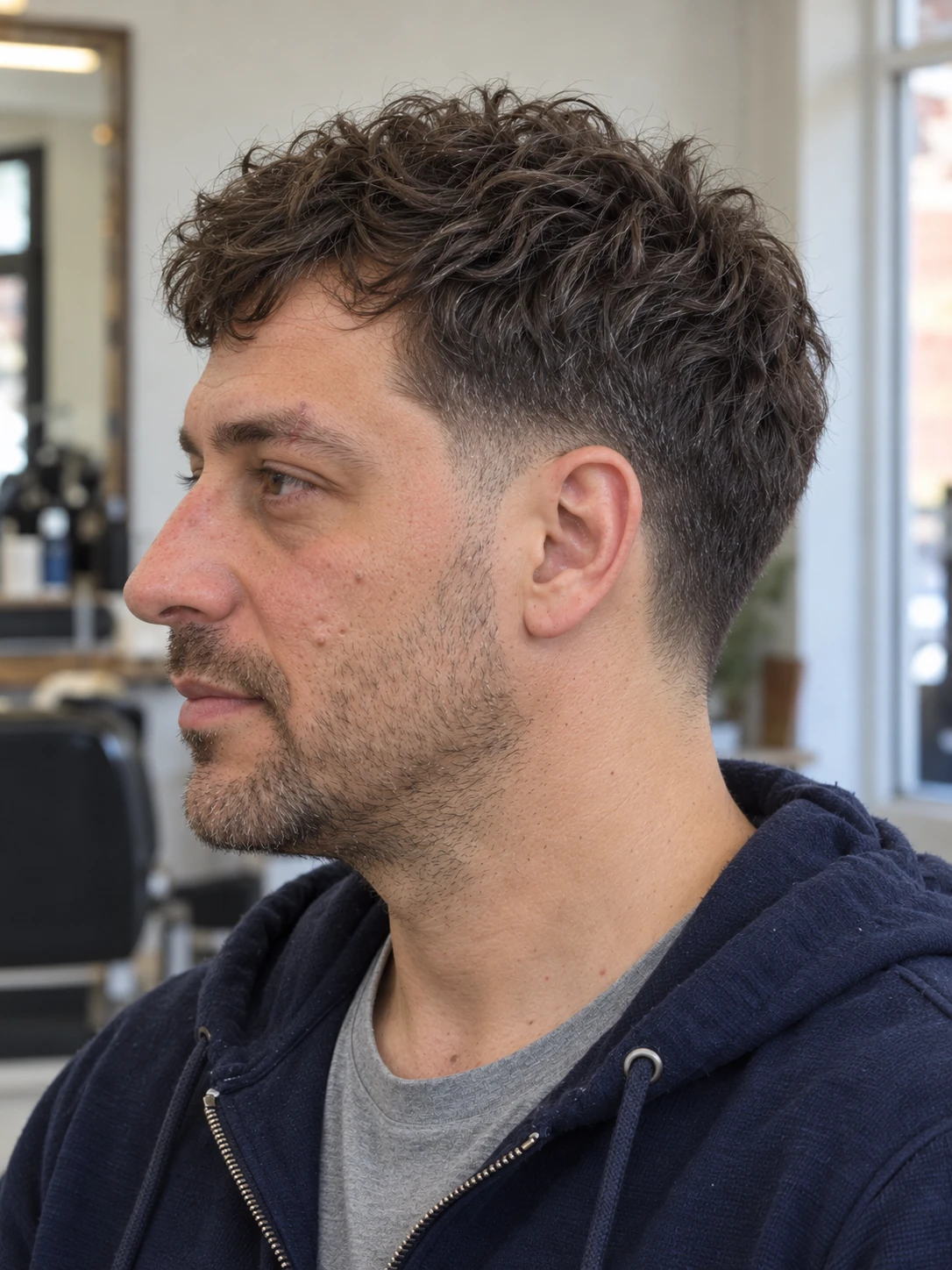
Low taper
Shorter edges, with more fullness above.
Read the guide ↗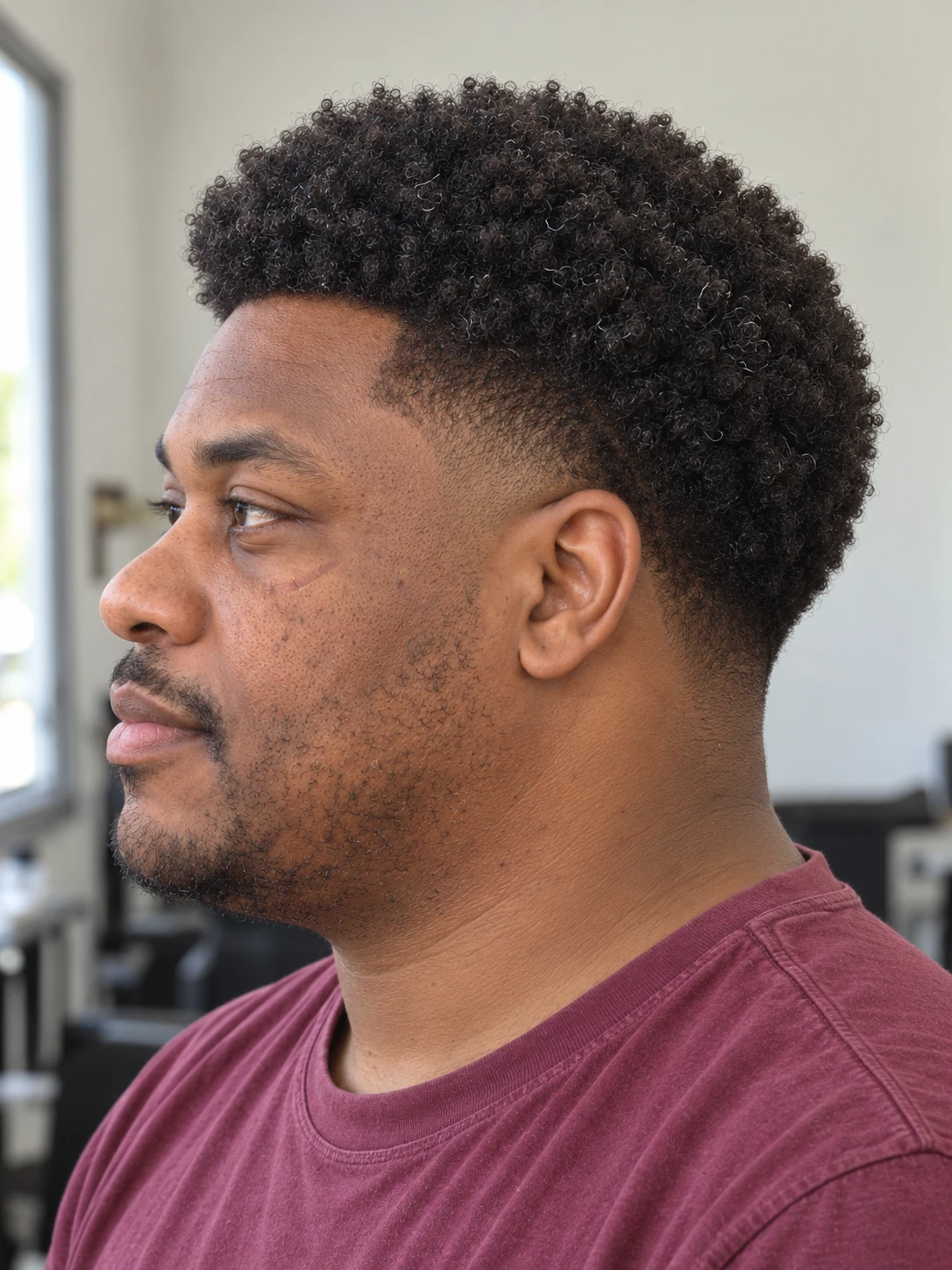
Mid taper
A more visible transition at the temples.
Read the guide ↗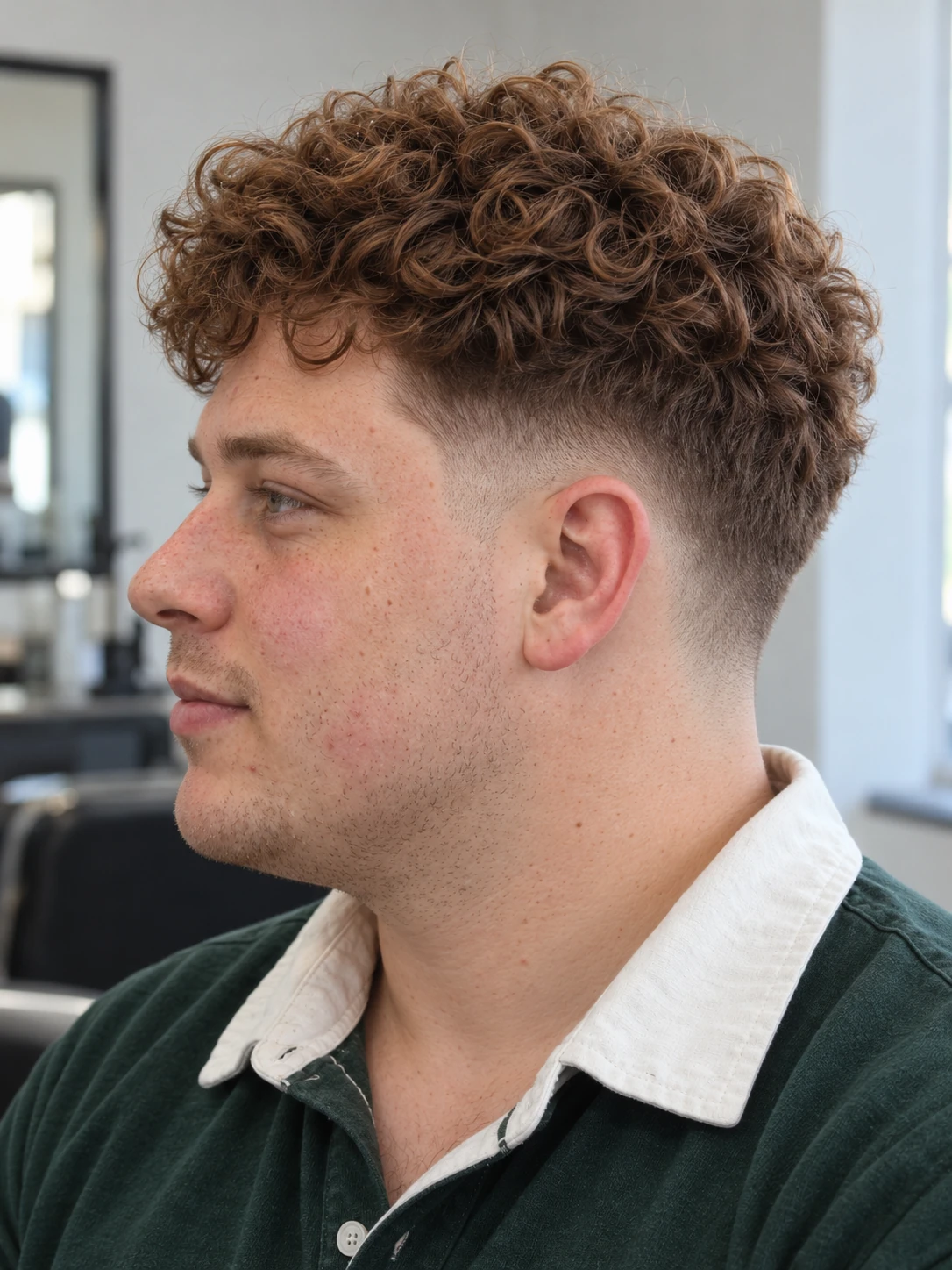
High taper
A higher transition with stronger contrast.
Read the guide ↗Different illustrated people and top shapes, not a measured comparison of the same cut. Swipe to compare all three.
01 / THE DETAIL
Where does a low taper sit?
Look for a short transition at the sideburn or lower temple and another at the nape. Hair remains between these areas, with more weight above the ears than in a fade that runs broadly around the whole head.
In the wavy crop above, follow the fuller side shape down to the temple. Then open the back view to check how the neckline is finished. The rounded Afro shows the same low-placement idea beneath a different texture.
02 / THE DETAIL
Low taper or skin taper?
Low describes the height of the transition. Skin describes the shortest finish. You can ask for a low taper that reaches skin at the very edge, or keep visible hair there for a softer contrast.
Decide which finish you prefer from a clear reference. An illustration cannot establish a clipper setting, and guard numbers do not describe every barber’s equipment in the same way.
- Keep the transition low at the temples and nape.
- Choose skin or visible hair at the shortest edge.
- Agree how much fullness remains above and around the ears.
03 / THE DETAIL
Choose a top that suits the way you wear your hair
A crop brings the focus forward. A side part gives the top direction. Rounded curls or coils make the silhouette fuller. None of these needs to become shorter just because you are having the edges tapered.
Use the texture links in the lookbook to find a closer starting point to your own hair. For curls and coils, judge the fringe and overall length when dry, as the outline can change as the hair dries.
04 / THE DETAIL
Check the sides and back before saving a look
The front shows the fringe and overall balance; the side shows the temple transition and retained weight. The rear is where you can compare the nape and neckline.
Use the angle controls to inspect one concept from several directions. These are separate AI illustrations, so check any inconsistent detail before using it as a cutting reference.
05 / THE DETAIL
How to style a low taper fade
Style the top for its length and texture. The tapered edges usually need little manipulation; the fringe, parting or curls do most of the visual work.
- Straight or wavy crop: dry it in the direction you want it to sit, then use a small amount of paste, clay or styling cream for the finish you prefer.
- Curly top: apply a curl styler to damp hair, arrange the curl groups and air-dry or diffuse gently. Avoid repeatedly disturbing the curls while they dry.
- Coily top: build the dry outline around your normal conditioning and styling routine. Choose definition or a softer rounded shape rather than forcing one finish onto every texture.
06 / THE DETAIL
When does it need a tidy-up?
Book around the edge detail you want to keep. A very close finish shows regrowth sooner than an edge with some visible hair; hair growth and your tolerance for a softer outline also matter.
Take a picture when you like the cut and compare it as it grows. Tell your barber whether you want only the temples and nape refreshed or a change to the top as well. There is no single appointment interval that suits every low taper.
07 / THE DETAIL
What to ask your barber
Start with the part of the reference you want to keep: the fringe, side fullness or rounded top. Then describe the change at the edges.
For example: keep the wavy crop and fuller sides, taper the lower temples and nape, and agree whether the shortest edge should show skin. Finish by explaining whether you want a matte, soft or more controlled finish at home.
THE USEFUL DETAILS
Questions, answered
Does a low taper have to go down to skin?
Discuss that separately. Low describes placement, while skin describes a shortest finish. Explain whether you want exposed skin or visible hair at the edges, and ask your barber how that choice would look alongside the retained length. A photograph alone is not a reliable guard-number instruction.
View in the questions library ↗Can I keep fullness above the ears with a low taper?
That is a useful preference to discuss. Point to the side fullness you want retained and ask where the shorter transition would end. Check a profile and rear reference as well as the front, because a front-only photograph may hide the amount removed behind the ear.
View in the questions library ↗What is a low taper fade?
A low taper fade keeps the short transition near the lower temples and nape, with more hair retained above it. Compare the side and rear views, then agree the placement and shortest finish with your barber.
View in the questions library ↗Keep exploring
Find your next haircut ↗FURTHER READING
Sources and editorial notes
Published by Taper Fade. These barbering and manufacturer resources provide background reading; they have not reviewed or endorsed this page.