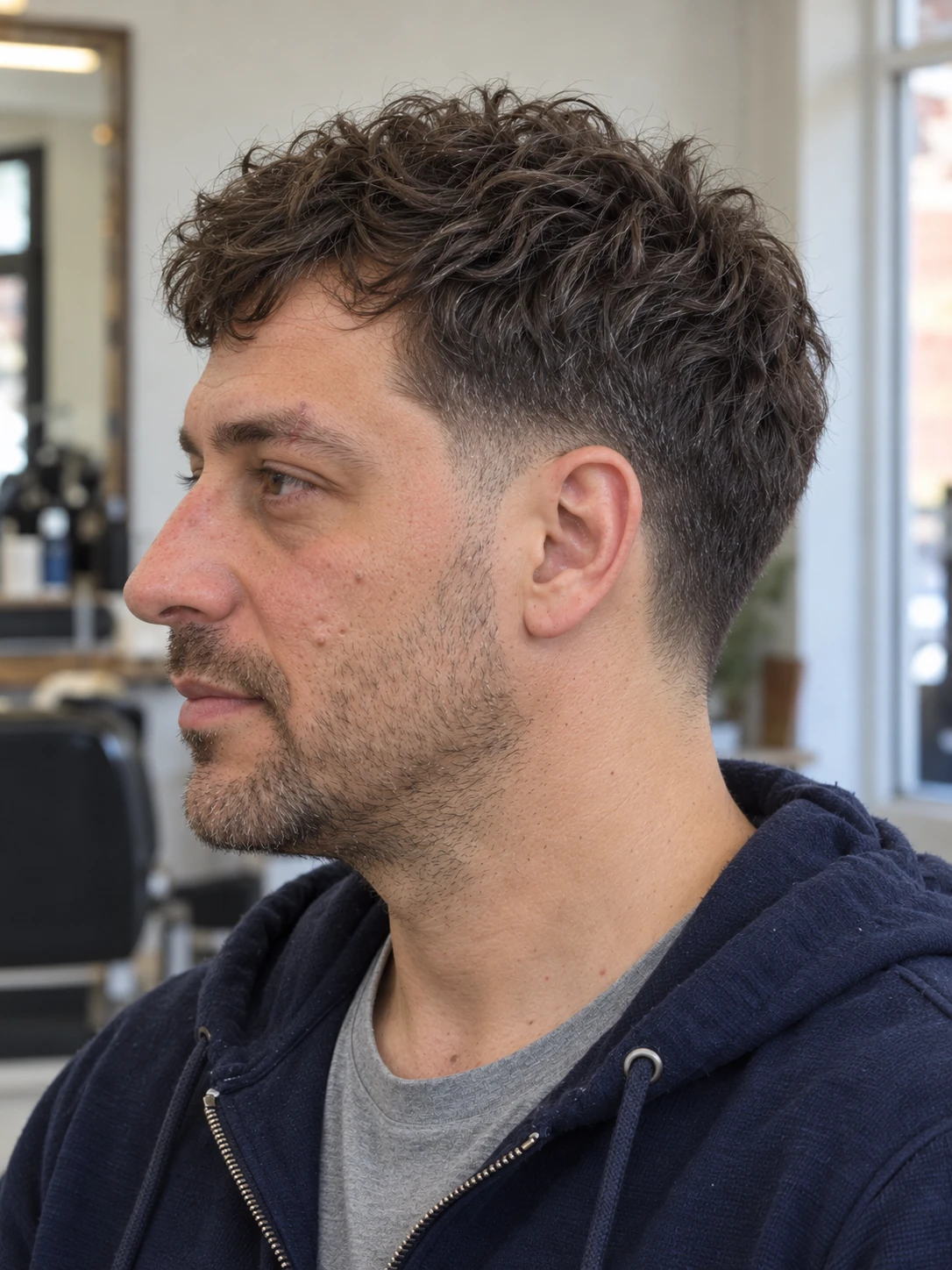
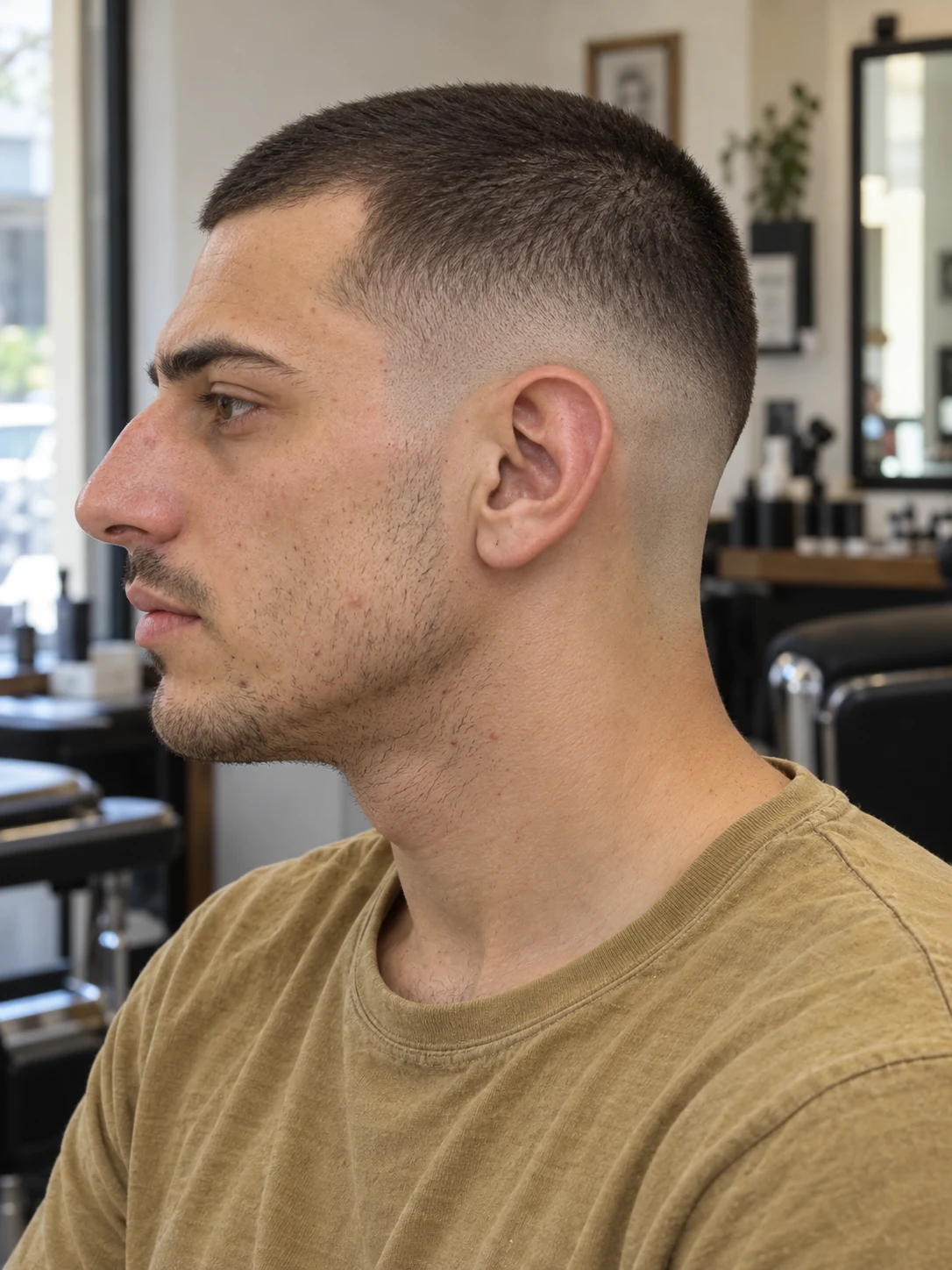
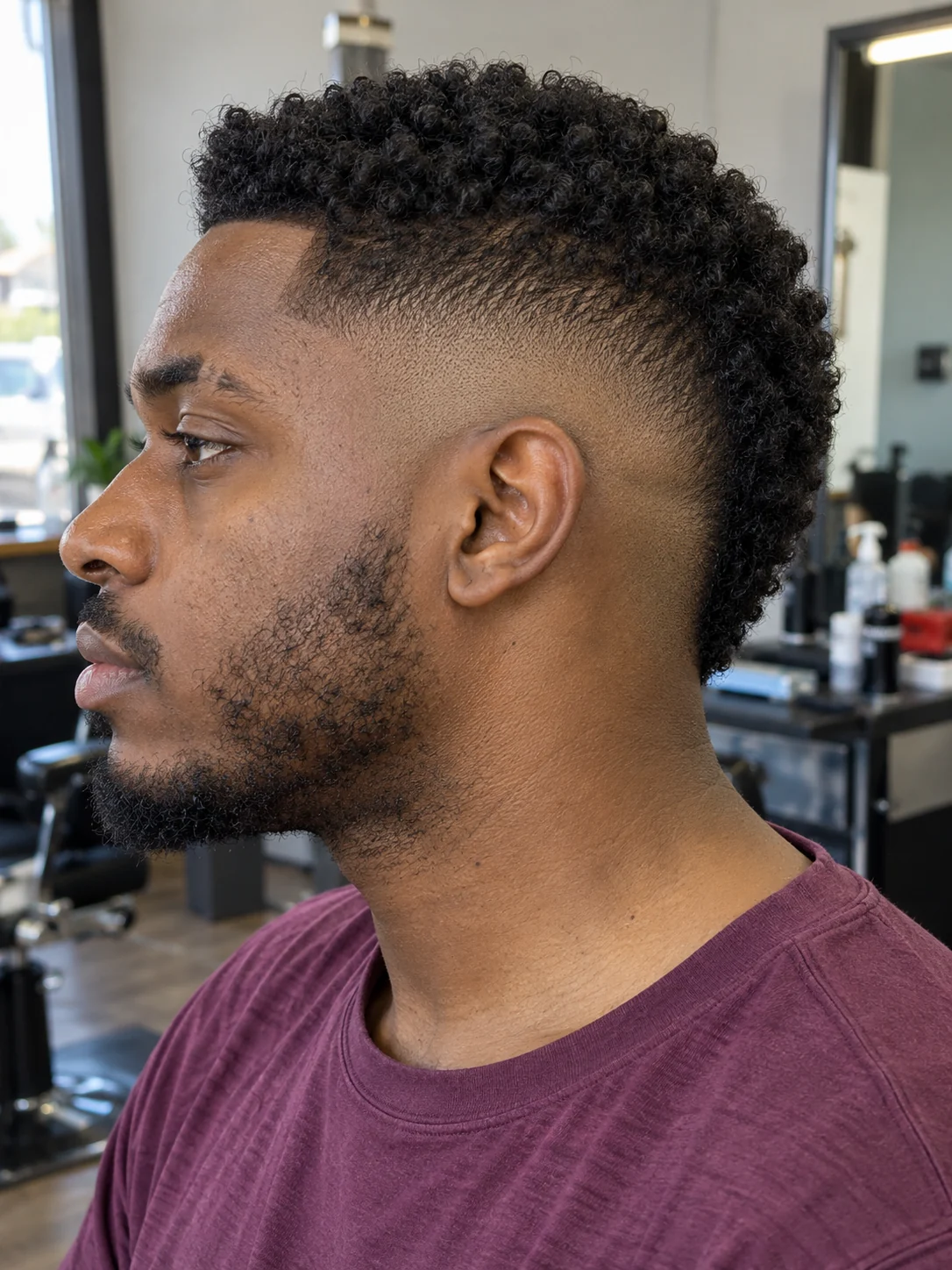
Taper and fade are not used identically by every barber. Some explanations distinguish them by how short the hair becomes; others use taper for a smaller transition at the sideburns and nape. That variation makes photographs and plain descriptions valuable.
Instead of trying to win a terminology argument, compare four visible choices: the area being shortened, its height, its shortest finish and the weight left above it.
01 / THE DETAIL
Start with how much of the perimeter changes
A localised taper can leave more of the side outline intact while refining the temple or sideburn and nape. A fuller fade can carry the transition across a larger part of the sides and back. Confirm that distinction with the person doing your cut.
Point around the ear in your reference. Do you want that whole area substantially shorter, or do you mainly want the ends of the outline to narrow? This is more precise than assuming the word taper answers both questions.
02 / THE DETAIL
Height is another choice
Low, mid and high describe relative placement, but they are not a universal measuring system. Two photographs called mid fades may have different contours, and a higher temple taper need not mean removing the same amount around the whole head.
Compare the upper boundary of the short section and how it meets the longer hair. If you like a particular curve or a retained area behind the ear, point it out. Do not rely on a fraction of head height as a cutting instruction.
03 / THE DETAIL
Skin describes the shortest finish
A skin finish concerns the shortest part of the blend. It does not, by itself, tell the barber whether you want low or high placement, a small localised taper or more extensive faded sides.
Explain whether you like the exposed-skin contrast in an example. If you do not, ask about leaving visible hair. A reference card should preserve that preference without prescribing an unverified clipper setting.
04 / THE DETAIL
Check what remains above the blend
Retained weight changes the silhouette as much as the shortest area does. Compare the outline above the ears and below the crown: is it close, fuller, connected to the top, or deliberately separated? These details can disappear in an attractive front-only image.
Cover the top of each photograph while comparing the sides, then compare the tops separately. This simple exercise helps you notice whether you want a different fringe rather than a different fade.
05 / THE DETAIL
Use a short description alongside the label
You can still use the name taper or fade. Add the detail that matters most: a localised temple and nape transition, more length around the ear, or a higher contrast across the sides. Ask the barber to describe the plan back to you.
If your examples disagree, identify the parts you mean rather than combining them silently. A clear consultation can end with a different haircut name and still produce the agreed direction.
- Coverage: localised edges or more of the sides?
- Placement: where does the transition sit?
- Finish: skin or visible hair?
- Weight: what remains above it?
THE USEFUL DETAILS
Questions, answered
What is the difference between a taper and a fade?
There is no completely uniform usage. A practical comparison is whether the shortening is localised at the sideburns and nape or extends across more of the sides and rear. Then agree height, shortest finish and retained weight separately. Ask your barber what they mean by each term before choosing.
View in the questions library ↗Are low, mid and high exact measurements?
Treat them as relative placement terms, not a universal ruler. Ask the barber to indicate the upper boundary of the short area on your head. Use profiles and a rear view to compare the contour, and explain any section of side weight you want preserved.
View in the questions library ↗Does skin fade describe how high the fade sits?
Skin describes the shortest finish rather than settling the placement. You still need to discuss how high the transition goes and how much of the sides and back it covers. If a reference has more exposed skin than you want, point that out explicitly.
View in the questions library ↗Keep exploring
Find your next haircut ↗FURTHER READING
Sources and editorial notes
Published by Taper Fade. These barbering and manufacturer resources provide background reading; they have not reviewed or endorsed this page.