
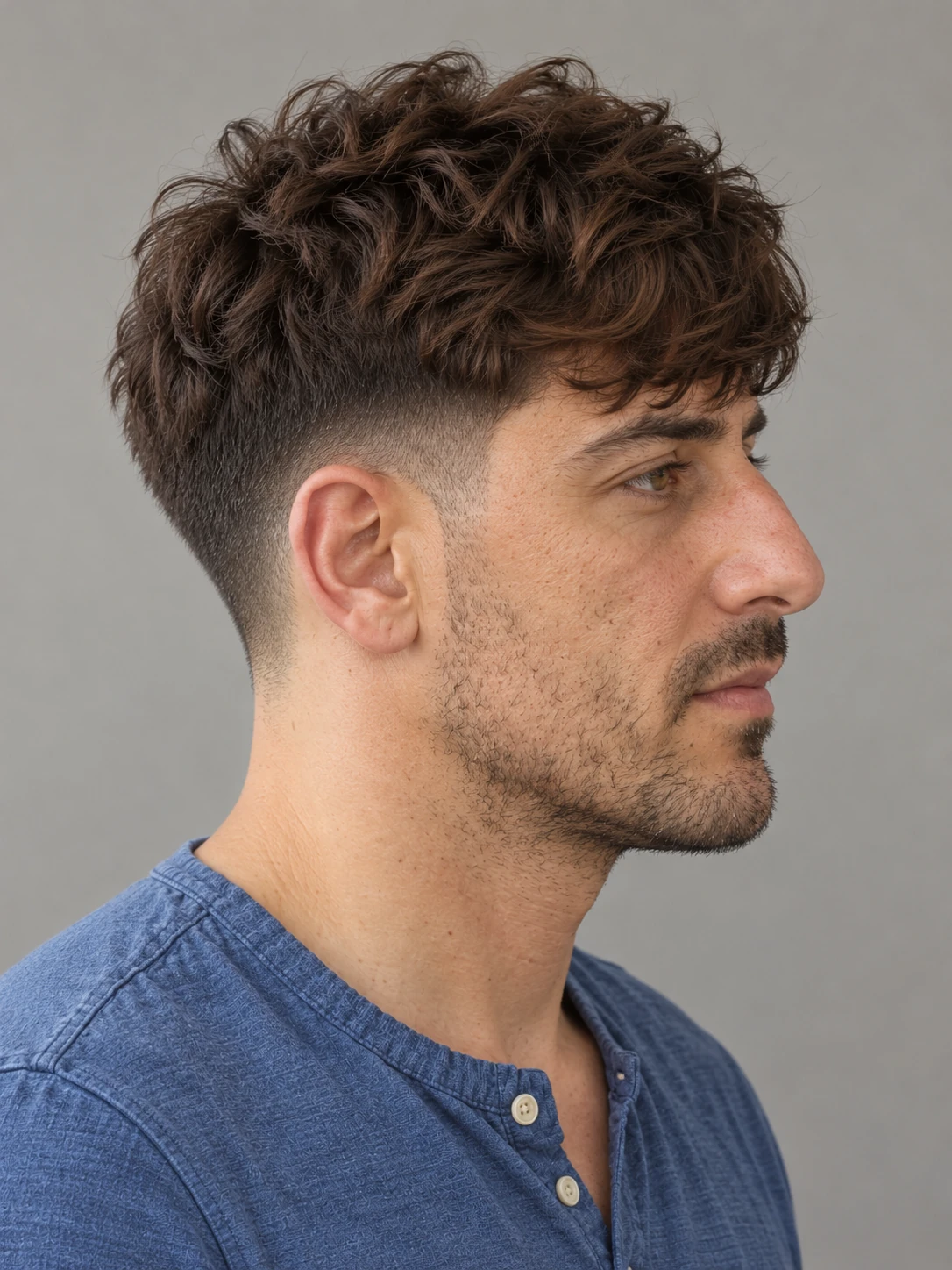
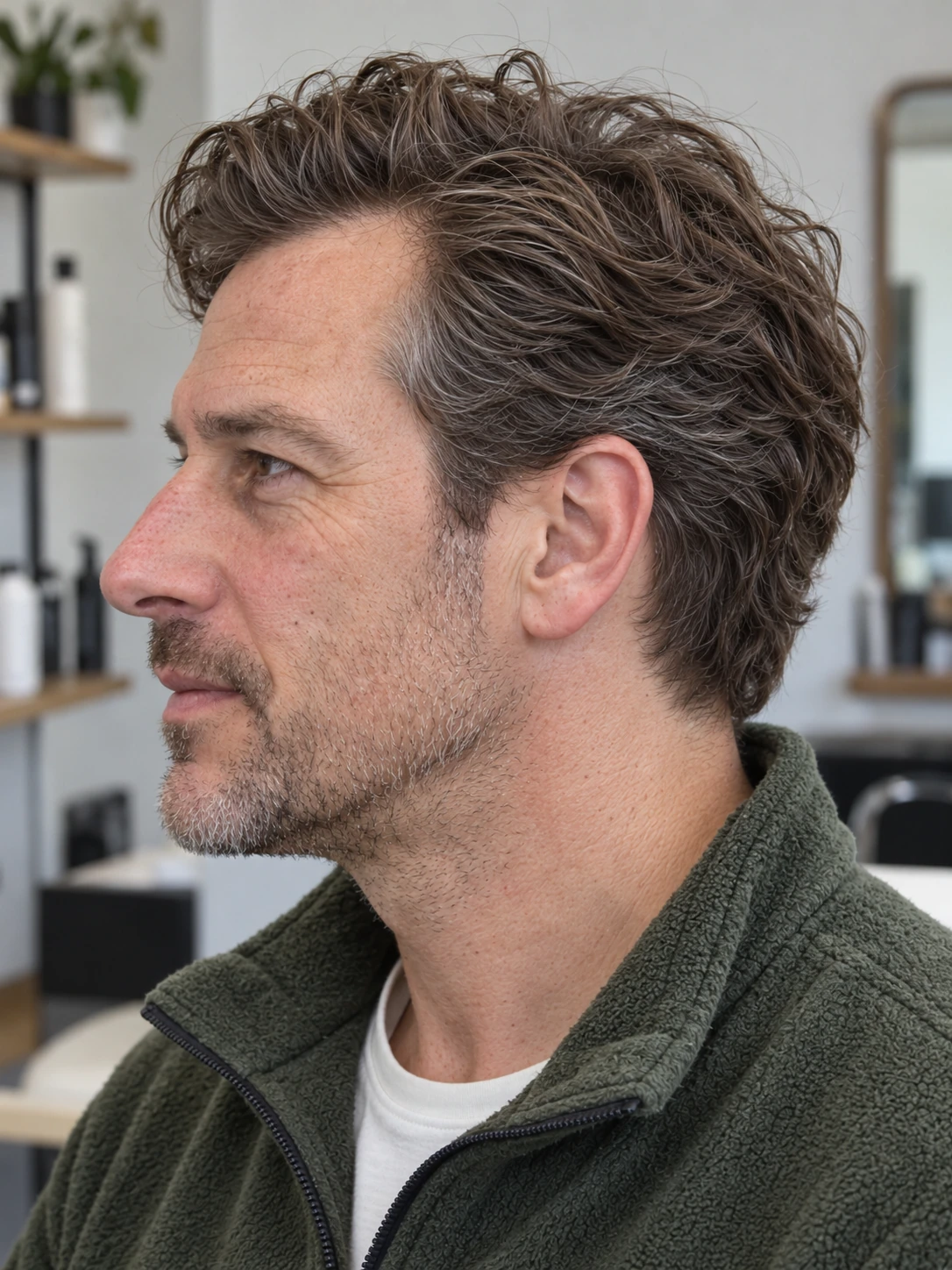
Straight and wavy hair can produce different versions of the same reference. The useful question is not whether a texture is allowed to wear a taper, but which top shape and routine you want above the shorter edges.
Start with direction: forward, to one side, lifted or away from the face. Then compare the length and weight that support that choice in your own hair.
01 / THE DETAIL
Choose how the front should sit
A top worn forward can look very different from the same general length moved sideways. Bring a front and profile example showing your preferred direction. If you want both options, make that part of the request before the fringe is shortened.
Tell the barber where your hair naturally parts or changes direction. A still photograph shows one arrangement, not how the hair behaves when you stop styling it. Ask what your everyday version would involve.
02 / THE DETAIL
Do not confuse a styled texture with a natural wave
A reference can show separation created by the cut, styling, natural movement or a combination. If you have straighter hair, do not assume a wavier photograph describes the result without additional work. Ask which parts are shape and which are finish.
Likewise, if you want to keep your wave, explain that instead of asking for an undifferentiated reduction in bulk. Discuss the finished outline and have the barber identify any areas they would adapt.
03 / THE DETAIL
Look at the weight above the ear
A low taper can sit beneath fuller sides, but the amount of retained hair still needs agreement. Compare whether the outline lies close, projects outward or sweeps back. The most appealing edge detail may belong to a top shape you do not want.
Use the profile to point out where the silhouette becomes too wide or too flat for your preference. This gives the barber a local problem to assess, rather than an instruction to take every side section shorter.
04 / THE DETAIL
Make the reference useful for your own hair
Straight or wavy is only one part of the description. Individual strand thickness, density and growth pattern also matter to the consultation. A photograph of someone with similar movement can still show much more or less apparent volume.
Ask what is realistic with your current length. If the reference needs more length through the front, agree a growing plan and an interim outline. Styling cannot be assumed to replace every difference in the starting cut.
05 / THE DETAIL
Compare a quick finish with a deliberately styled one
Tell the barber whether you will use a dryer or usually let the hair dry without shaping it. Ask to see the cut before the final product is added, then watch the finishing steps. That helps separate the haircut from its presentation.
At home, change one part of the routine at a time and note the result. You may prefer a softer daily version to the reference photograph. That is a useful preference to carry into the next haircut, not a failure to copy the image.
THE USEFUL DETAILS
Questions, answered
Should I decide whether to wear the top forward or sideways?
Yes, make your main direction part of the brief. It affects the fringe position and the shape you want retained. If you hope to use both directions, ask whether your current length and growth pattern support that flexibility rather than treating every reference as interchangeable.
View in the questions library ↗Can a wavy-hair reference help if my hair is straight?
It can explain an outline or direction you like, but it does not establish the same movement on your hair. Ask which features come from natural wave, cutting and styling. Choose a realistic version with your barber and be clear about the tools and effort you are willing to use.
View in the questions library ↗Keep exploring
Find your next haircut ↗FURTHER READING
Sources and editorial notes
Published by Taper Fade. These barbering and manufacturer resources provide background reading; they have not reviewed or endorsed this page.