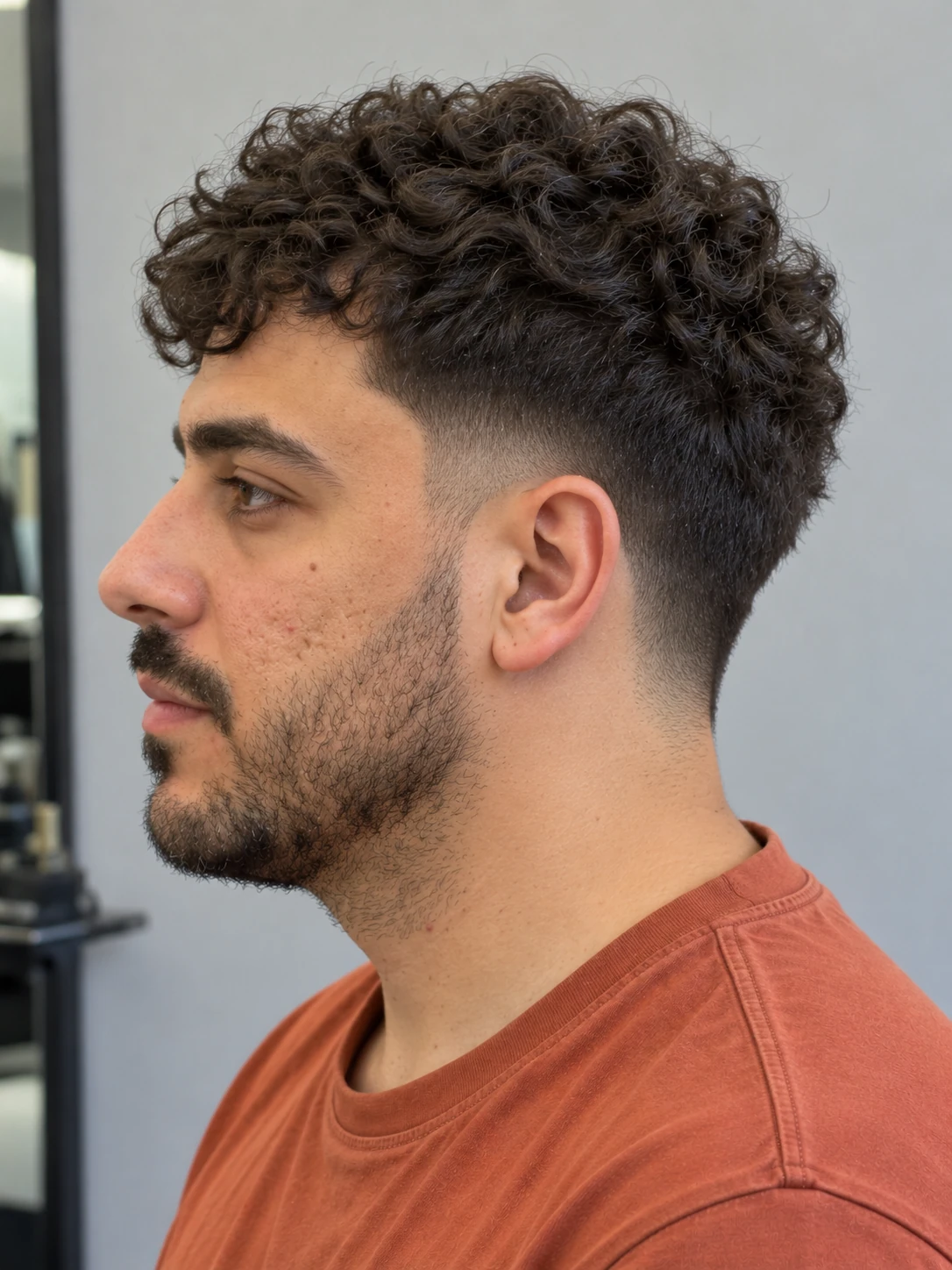
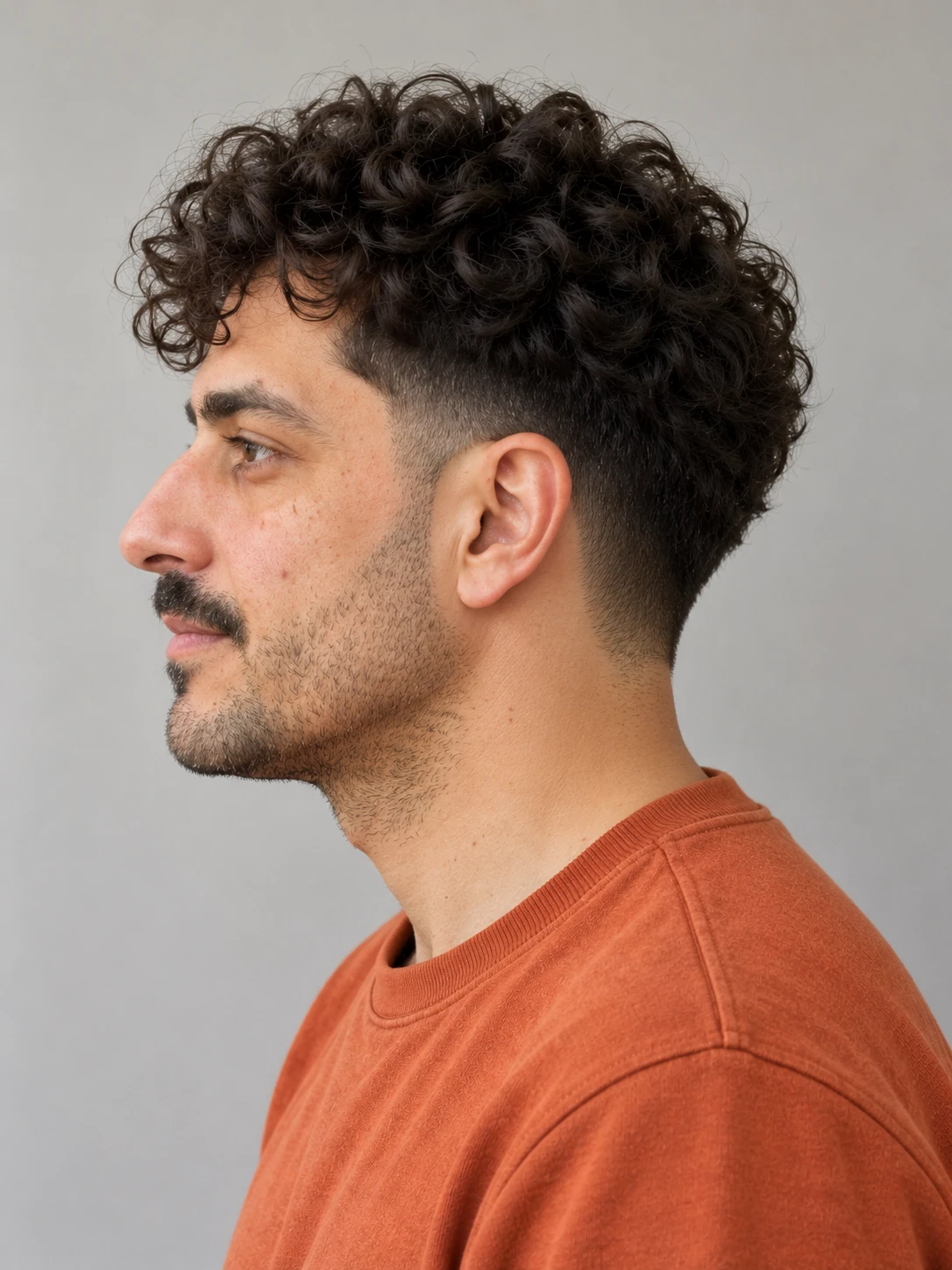
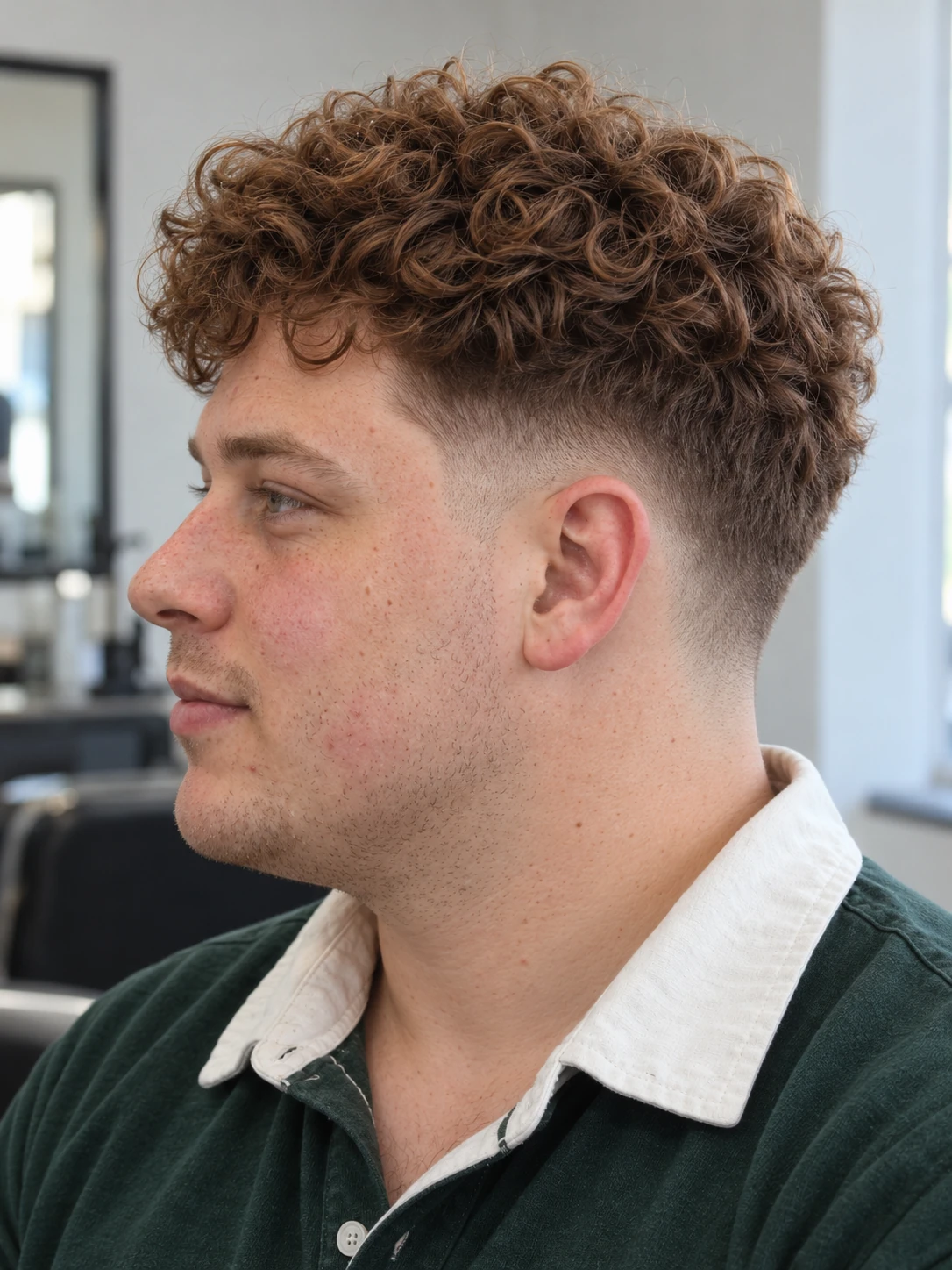
A taper can refine the perimeter beneath a curly top without deciding the entire curl silhouette. Begin with the shape you want to preserve, then discuss the smaller transition below it.
The useful reference is not simply 'someone with curls'. Look for the top outline, fringe direction and amount of side fullness that interest you, while recognising that your own pattern and density need their own assessment.
01 / THE DETAIL
Discuss the hair as you normally wear it
Tell the barber whether you usually wear the top in defined groups, a looser shape or brushed out. Bring a photograph of your ordinary finished hair if it looks different from how it arrives at the appointment.
Ask to discuss the intended dry outline, including where the fringe should sit. Wet or stretched length is not the same visual reference as a finished curl shape, so make clear which appearance you are describing.
02 / THE DETAIL
Specify the fullness above the taper
Compare a profile view with the front. Would you like the curls to sit wider above the ears, rise more at the crown or form a closer outline? Those choices are more informative than asking for the shortest possible sides.
Point out the section you want retained. If the transition sits beneath a fuller top, ask how it will connect and whether the same amount of side weight makes sense for your hair. Leave the cutting method to the barber.
03 / THE DETAIL
Give the fringe its own decision
A curly fringe can be a central feature or something you prefer to move away from your face. Show where you want it to finish when styled in your usual way, rather than borrowing a straight-hair length from a different reference.
Explain whether you want flexibility to wear it forward and back. Ask what would need to stay longer for those options and whether your current length supports both. Do not assume every reference can be achieved in one visit.
04 / THE DETAIL
Compare texture without confusing it with density
Curl pattern, individual strand thickness and the amount of hair present are different observations. A picture with a similar curl pattern can still have a different overall outline and level of visible scalp.
Use the example to explain the desired effect, then ask for an adaptation. Avoid treating a texture label or an ethnicity label as a complete specification of how a person's hair behaves.
05 / THE DETAIL
Ask for a repeatable finished version
Request a demonstration using the routine and tools you are prepared to use. Ask which steps are essential to the photographed shape and which are optional finishing choices. There is no need to buy a new set of products to have that conversation.
Record what you liked once you have worn the cut at home. At your next visit, describe a specific change in shape or fringe position. That is more useful than asking to shorten everything because the style feels different.
THE USEFUL DETAILS
Questions, answered
Why discuss curl pattern and density separately?
A similar visible pattern does not mean two people have the same amount of hair or individual strand thickness. Use the reference to describe the desired outline, then ask the barber to assess your starting hair. That makes the discussion more useful than choosing a picture by texture label alone.
View in the questions library ↗What length should I request for a curly fringe?
Discuss where you want it to sit in its usual dry finished state. Show whether it should fall forward or move away from the face, and ask which length supports that on your hair. There is no single measurement that produces the same fringe position across different curl patterns.
View in the questions library ↗How can I ask to keep my curls while adding a taper?
Point out the curl height, width and fringe position you want retained, then discuss the transition beneath that shape. Tell the barber how you normally wear the top. Ask which parts need adapting for your own pattern and density instead of assuming another person's curl silhouette will transfer exactly.
View in the questions library ↗Keep exploring
Find your next haircut ↗FURTHER READING
Sources and editorial notes
Published by Taper Fade. These barbering and manufacturer resources provide background reading; they have not reviewed or endorsed this page.