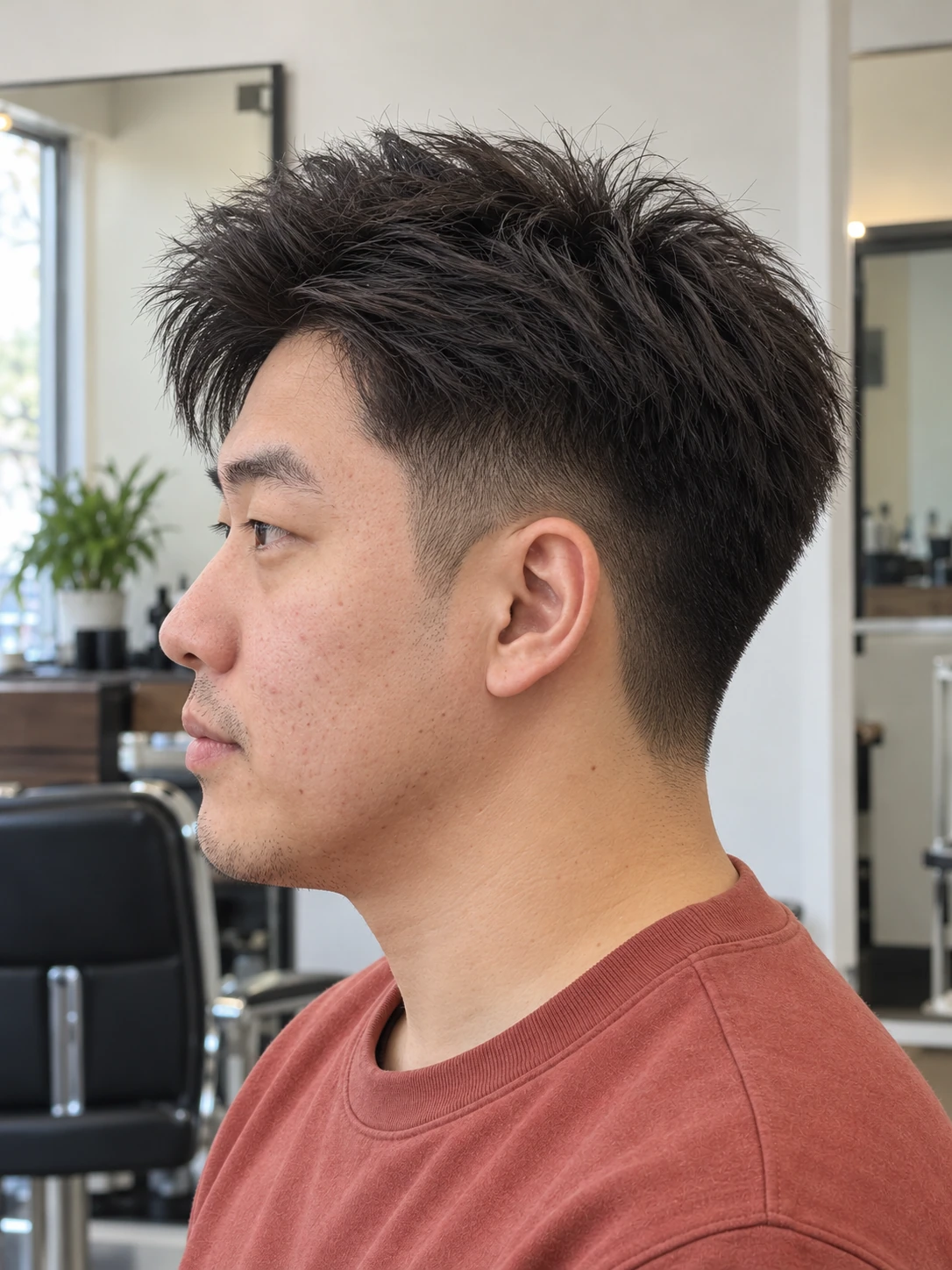
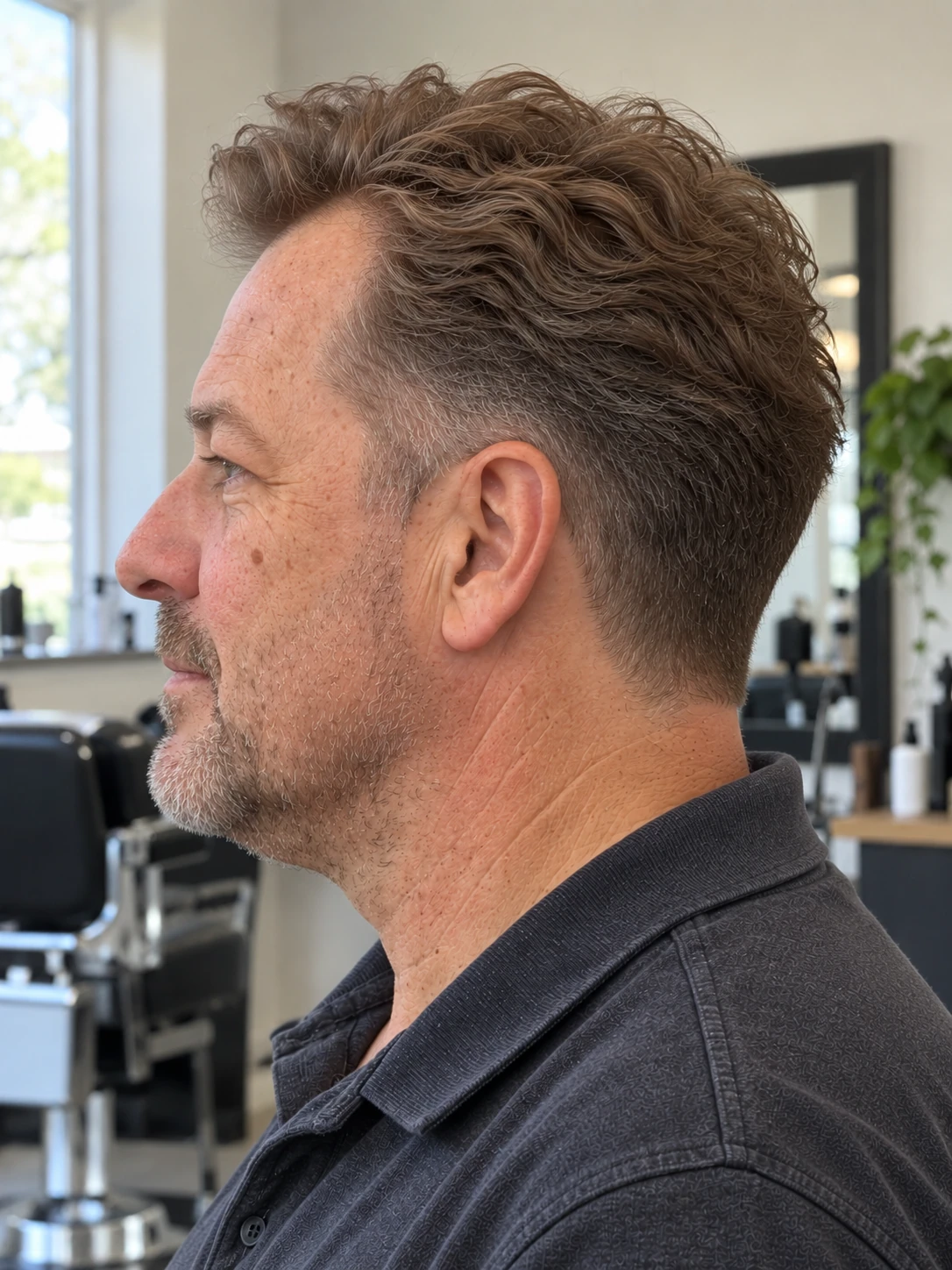
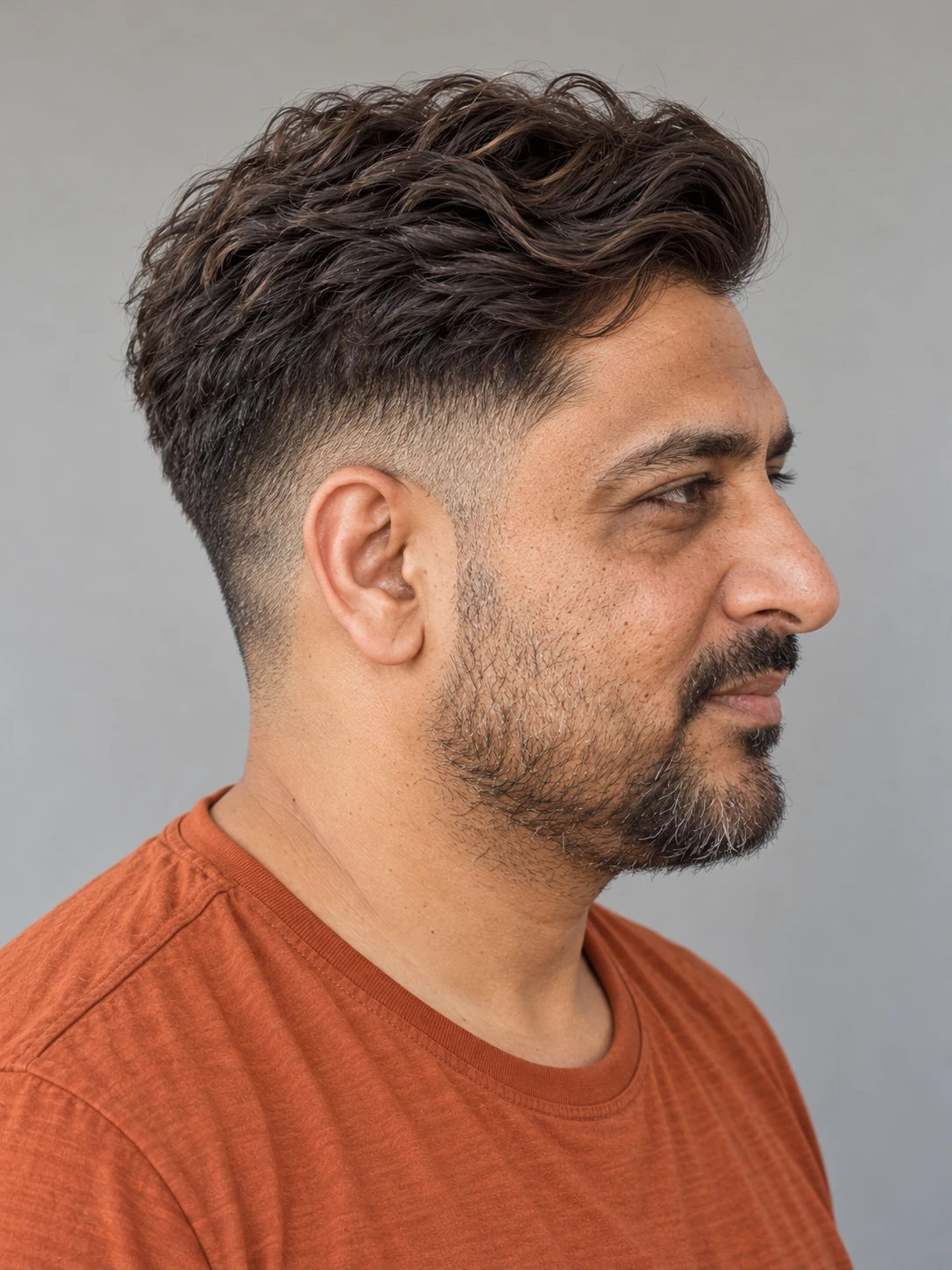
Blowout taper is a recognised service and education term, but it does not provide one universal cutting recipe. For this guide, the useful starting point is a fuller, lifted or outward-moving top above shorter tapered edges.
That is a working description to confirm with your barber. A raised front, a forward fringe and a rounded curly silhouette can all be presented under similar labels while requiring different choices.
01 / THE DETAIL
Identify the volume you actually like
Compare the whole outline: height at the front, fullness through the crown and width above the ears. Do you like an airy shape, a rounded top or a more deliberate sweep? Mark that feature instead of saving a photograph solely for its name.
Use a profile as well as the front. A picture with the head tilted can exaggerate height or hide the back, so collect another angle when possible. The goal is to understand the silhouette rather than repeat a trend label.
02 / THE DETAIL
Agree whether the front lifts, falls or moves sideways
A forward fringe and a front swept away from the face are different requests, even if both have a fuller crown. Tell the barber how much forehead you want visible and which direction you expect to wear the hair.
If your examples show both, decide which is the main version. Ask whether the retained length could support another arrangement, rather than assuming every photograph describes interchangeable styling.
03 / THE DETAIL
Specify the taper beneath the top
The blowout part does not settle taper height, coverage or shortest finish. Compare the temple and nape independently. Decide whether you want a small edge refinement or substantially shorter sides under the fuller shape.
Pay attention to the connection above the ear. If that fullness is essential to the reference, point it out before asking for a higher transition. Ask the barber what each option would preserve or remove.
04 / THE DETAIL
Find out what produces the photographed finish
Ask whether the example was shaped with a dryer, follows natural movement or uses a particular finishing routine. Explain the time and tools you are prepared to use. Do not treat a carefully arranged photo as evidence of effortless daily wear.
Request a demonstration and instructions for any tools or products actually used. You do not need a universal temperature, product amount or hold promise to make that useful; you need a routine appropriate to the finished cut and the manufacturer's directions.
05 / THE DETAIL
Agree what can be achieved from your starting point
Bring your current length into the discussion. If the desired shape needs more top length, ask which perimeter changes make sense now and what should be left to grow. Keep the interim plan connected to the final silhouette.
When evaluating the result, take ordinary front and profile pictures with similar lighting. Compare the features you agreed, not an unrelated social-media result. Classification and matched production examples for this style still require editorial review.
THE USEFUL DETAILS
Questions, answered
How much styling does a blowout taper need?
Ask about the specific result rather than the label. A reference may depend on a dryer, natural movement or a deliberate finishing routine. Request a demonstration on your own cut and explain your available time. Neither a photograph nor the style name proves that the same shape will be effortless at home.
View in the questions library ↗What does blowout taper mean?
It is a term to confirm with a visual reference. This guide uses it for a fuller, lifted or outward-moving top above tapered edges. That working description does not settle fringe direction, taper height or skin finish. Point out the exact silhouette you like and ask your barber how they interpret the name.
View in the questions library ↗Keep exploring
Find your next haircut ↗FURTHER READING
Sources and editorial notes
Published by Taper Fade. These barbering and manufacturer resources provide background reading; they have not reviewed or endorsed this page.